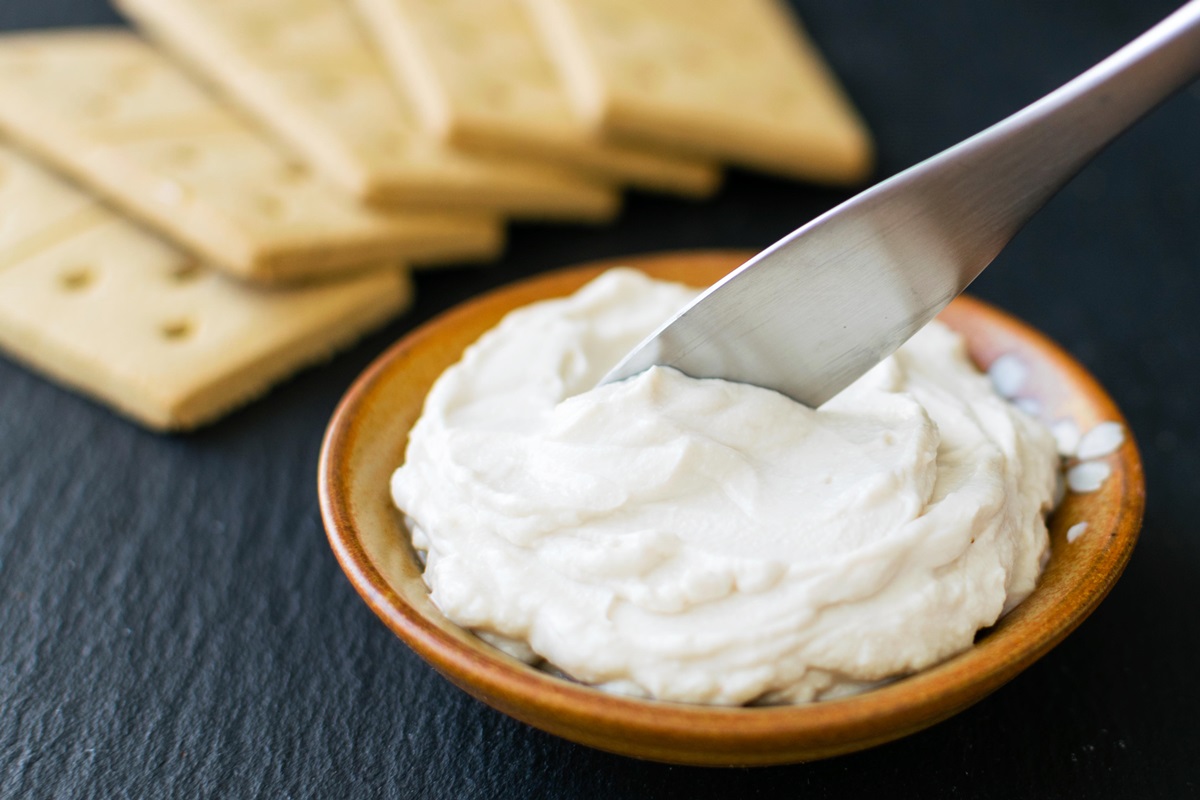
If you can’t do dairy, nuts, or soy, or your simply looking for a delicious natural spread, try this dairy-free sunflower seed cheese recipe. It’s a unique, nutritious option that suits nearly every dietary need (from food allergies to paleo), is quite versatile, and can be used like a sour cream, like a cream cheese, or even like a soft cheese for charcuterie. We’ve also included a range of options with this cookbook author creation to help you customize it to taste!

Dairy-Free Sunflower Seed Cheese with Garlic & Chive Option
This dairy-free seed cheese recipe was first shared with us about 20 years ago! It was a sample from the cookbook Almond Essence by Janet L. Doane. In fact, Janet shared a few recipes with us. We decided to merge two of her dairy-free sunflower seed cheese recipes into this one, and have also added nutrition facts and the FAQs below.
What Type of Sunflower Seeds Should I Use?
Choose raw, unsalted, sunflower seed kernels or hulled sunflower seeds. You don’t want the hard shell on them! Janet uses sprouted sunflower seeds for optimal digestibility. You can sprout your own, buy sprouted seeds, or just use regular sunflower seed kernels.
How Do I Soak the Seeds?
Simply place the seeds in a bowl, and cover them with enough water to reach about an inch or so above the seeds. I use a regular cereal bowl or small pyrex dish. I like to cover the bowls with plastic wrap or a lid and refrigerate, but refrigeration isn’t necessary. Let them sit for the time noted. If they sit too long, it isn’t a big problem. Up to 12 hours is fine, and even a day is okay if you forget. Just start with less water / milk alternative when blending if you oversoaked them. Drain off all water (and seed skins) before adding the seeds to the recipe.
Why Do I Need to Soak the Seeds?
They swell up with water and become softer. Once softer and water-logged, they blend more readily into a creamy texture.
What if I Don’t Have Time for Soaking?
Not a worry! Put the sunflower seeds in a spice grinder or small blender or food processor. Grind them into a powder. Add them to your recipe, and add more water or milk alternative as needed. Since the nuts and seeds haven’t absorbed any water yet, they will begin soaking up water as you blend. The finished dairy-free sunflower seed cheese spread will continue to thicken as it sits.
Do I Really Need to Rub Off the Skins?
If you are a bit of a perfectionist, like me, rubbing off the skins can seem tedious. Most people just give the seeds a good massage to get most of the skins off, and then roll with it. If you leave the skins on, the dairy-free sunflower seed cheese will just be a little greyer in color. It doesn’t notably affect the taste.
What is Ume Plum Vinegar?
It’s a red vinegar made from Japanese pickled plums (umeboshi) that has a salty, tangy taste, which is well-loved in many more traditional vegan cheese alternative recipes and in nutrition circles. Ume plum vinegar is popular in, you guessed it, Japan, but it isn’t too hard to find in the U.S. It’s easiest to find at Asian grocers, but I’ve also spotted it in natural food stores and online. I recommend trying it at least once. But if you can’t find it, just see the recipe notes for other options.
Why is there No Nutritional Yeast in this Recipe?
Nutritional yeast adds more of a “cheddar” vibe, which isn’t what Janet was going for in this recipe. If you want a cheesier taste, you can add a little nutritional yeast, to taste. I sometimes add a little nutritional yeast to seed cheese when using the apple cider vinegar and salt, instead of the ume plum vinegar. I would start with just 1 tablespoon nutritional yeast, and add more to taste.
Why is there No Coconut Oil?
It isn’t needed! Because this dairy-free sunflower seed cheese is made without any coconut, it’s low in saturated fat. If you do want to add a little more richness, I would add a touch of lite olive oil. This can smooth it out more.
Can I Substitute Other Seeds?
Seeds have somewhat pronounced flavors, so it can be difficult to switch between them. Shelled hemp seeds (hemp hearts) will blend up nice and creamy but they do have a somewhat “grassy” taste. Pumpkin seeds are similar to sunflower seeds, but not quite as soft. Just keep the flavors in mind when making substitutions.
Can I Use Nuts Instead of Seeds?
Well, it wouldn’t be nut-free if you did, but cashew nuts, macadamia nuts, and almonds will also work in this recipe. Janet also shared her Dairy-Free Herb Cheese Recipe with us, which has a 50/50 mix of sunflower seeds and cashews.
Can I Substitute Garlic Powder for the Garlic?
Yes, I would use just 1/8 teaspoon garlic powder or maybe up to 1/4 teaspoon if you want a little more garlic in the flavor.
Should I Strain the Dairy-Free Seed Cheese with Cheesecloth?
That’s up to you! As is, it is a soft, spreadable cheese alternative. If you want more of a soft think cheese, or once that can be sliced into soft wedges, I would strain it. Scrape the mixture into a fine mesh sieve lined with a few layers of cheesecloth. Place the sieve in a bowl to drain. Bring the corners of the cheesecloth together, to cover the mixture. Let it drain for several hours and up to 24 hours to thicken. When you remove it from the cheesecloth it will be much thicker, but still creamy, like a dairy-free sunflower seed cream cheese in consistency (and like pictured).
Does it Taste Like Cheese?
The longer it chills, the more pungent and flavorful it will become. And it is tasty as a cheese stand-in within all types of recipes. But like all cheese alternatives that I’ve ever tasted, it has it’s own flavor nuances. It isn’t dairy, but it can fill the void!

Special Diet Notes: Dairy-Free Sunflower Seed Cheese
By ingredients, this recipe is dairy-free / non-dairy, egg-free, gluten-free, grain-free, nut-free, peanut-free, soy-free, oil-free, vegan, plant-based, paleo, keto for some people, and vegetarian. It’s also paleo-friendly and keto-friendly.
Dairy-Free Sunflower Seed Cheese Recipe
Ingredients
Method
- Before draining the sunflower seeds, rub them between your fingers to help release most of the skins. The skins will float to the top so you can drain most of them off before dumping the seeds into a sieve to drain them completely. The skins affect the color and texture a little, but not the taste. So it’s okay if you leave them on.
- Place the seeds in a high-power blender, single-serve blender, or food processor.
- Add the water or milk alternative, lemon juice, vinegar, and garlic.
- Blend until the mixture is as smooth and creamy as possible, stopping to scrape down the sides as needed. Add more milk alternative or water, as needed, if the mixture becomes too thick.
- You can enjoy the cheese alternative immediately, or let it refrigerate for several hours to thicken and to allow the flavors time to meld.
- Scrape the dairy-free seed cheese into an airtight container and store it in the refrigerator for up to 3 days.
Nutrition
Notes
Tried this recipe?
Let us know how it was!You Should Also Try Our Dairy-Free Yogurt Cheese Recipe!