
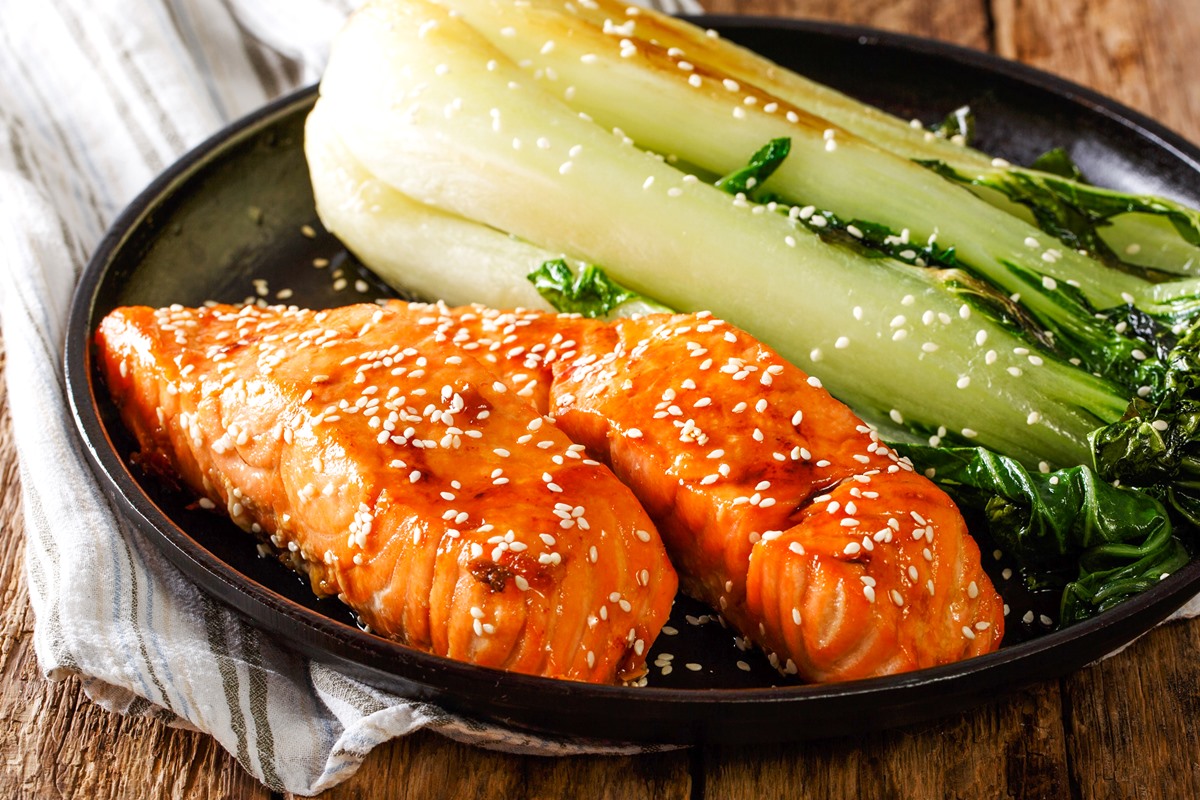
This recipe for Asian grilled salmon was shared with us by my friend Janelle, who used to run a blog called Talk of Tomatoes. Janelle tends to be frugal, but she said this recipe was worth the expense of some rather pricey salmon steaks she splurged on. It’s sweet, salty, umami flavor pairs well with simple sides, like rice and broccoli or bok choy. And it’s very easy to make with only a few minutes of hands-on prep time. But you might want to plan ahead, since the fish should marinate for at least 30 minutes, and preferably 2 hours.

Dairy-Free Asian Grilled Salmon Recipe
Salmon is perhaps my favorite protein, and something I also like to splurge on. And I’m a bit addicted to Asian-style recipes. So I recently made Janelle’s dairy-free Asian grilled salmon, and thought I would add my modifications plus a few notes and FAQs to this post.
What Does Asian Grilled Salmon Taste Like?
I admit, the term “Asian” is a bit vague. We think it’s a bit like teriyaki salmon, but elevated. The maple syrup lends a richer flavor than sugar, brown sugar, or honey, and the ginger, garlic, and sesame oil add more complexity to the marinade and sauce. But it is sweeet, savory, and salty like Japanese teriyaki.
Isn’t Asian Salmon always Dairy-Free?
Not always, but usually. I’ve surprisingly seen milk in several Asian marinades and sauces. Regardless, keep in mind that we’re a dairy-free website, not just a dairy alternative website. We love sharing delicious recipes that are naturally dairy free, too! In fact, we hope we can show you how wonderful dairy-free food is!
Wild vs Farmed Salmon
We could go on all day about the environmental aspects of this topic. While wild salmon wins hands down, farmed salmon has improving on the sustainable side. I’ll let you make that decision, and will skip ahead to the recipe-related notes. Farmed salmon is much cheaper than wild salmon, and since it’s higher in fat, it is very forgiving to cook. It almost always comes out tender. Wild salmon is leaner, and thus meatier and firmer. It dries out more easily when grilled, but the oil in the marinade of this recipe will help to keep it more tender.
Ingredient FAQs
- Salmon: Can I Use Salmon Filets? You can use salmon filets instead of salmon steaks, but you might need to reduce the cooking time by a minute per side, since filets aren’t as uniformly thick.
- Soy Sauce: What Type Should I Use? Janelle uses regular soy sauce, but you can use low-sodium soy sauce if you want to cut the salt a little. For gluten-free needs, look for “gluten-free soy sauce,” “wheat-free tamari,” or “gluten-free tamari” at the store.
- Sesame Oil: Can I Use a Differing Oil? You definitely can, but it will change the intended flavor a little. Sesame oil has a pronounced flavor. You can use any other cooking oil, aside from coconut oil. Coconut oil will separate and solidify into chunks on the salmon in the refrigerator. If you need sesame-free, be sure to use green onions instead of sesame seeds for the garnish, too.
- Garlic: Can I Omit it? If you don’t like garlic, have low FODMAP needs, or are simply out of it, you can omit it. Of course garlic does add to the flavor, but it isn’t essential. You can also substitute 1/4 to 1/2 teaspoon garlic powder for the garlic.
- Scallions: What are they? This is another name for green onions. Use the green part only for the garnish. If you don’t want to waste the white bulb, you can slice it and add it to the marinade. Alternatively, you can use chives for the garnish.
Special Diet Notes: Asian Grilled Salmon
By ingredients, this recipe is dairy-free / non-dairy, egg-free, optionally gluten-free, nut-free, and peanut-free. I’ve also included a soy-free option in the notes of the recipe.

Asian Grilled Salmon with Soy, Maple, and Sesame
Ingredients
Method
- In a shallow dish, whisk together the soy sauce, maple syrup, and sesame oil. Add the salmon steaks in a single layer, and turn to coat with the marinade.
- In a small bowl, stir together the ginger and garlic, then rub the mince on both sides of the salmon steaks.
- Cover and refrigerate the salmon for 2 hours, turning occasionally.
- Pour the salmon marinade into a small saucepan, and bring to a boil. Boil for around 3 minutes, or until syrupy.
- Preheat your grill to medium-high heat. Cook the steaks for 4 to 6 minutes per side.
- Plate the fish, and pour the marinade over top. Garnish with scallions or sesame seeds, if desired.
Nutrition
Notes
Tried this recipe?
Let us know how it was!More Recipe Tips: Dairy-Free Asian Grilled Salmon
Serving Suggestions
- Bowls: Cook 4 servings of rice (1 cup uncooked) and steam 1 large head of broccoli florets or 1 bunch asparagus (woody tips removed). Divide the rice between 4 bowls and top with broccoli. Cut salmon into chunks and put on top of broccoli. Drizzle with the cooked marinade and optionally top with toasted sesame seeds.
- Simple Plate Dinner: Serve salmon with rice on the side and sauteed baby bok choy or spinach.
- Stir-Fry Style: Heat a little oil (like sesame oil) over medium high heat, and stir-fry a mix of veggies, like snap peas, sliced carrots, bell pepper strips, quartered mushrooms, and chopped onions. Serve over rice and drizzle with the cooked marinade.
- Bento Box: Add the salmon to one quadrant of your bento box, a scoop or rice to another, and cucumber salad, seaweed salad, or green salad to the other box. Serve with miso soup (you can use an instant type!).
- Noodles: Make the stir fry style vegetables and toss them with cooked udon noodles, soba noodles, rice noodles, or ramen noodles. Top with the salmon and cooked marinade.
Make Ahead
- Time: 2 to 3 hours ahead. Since the marinade is somewhat salt heavy, avoid marinating the fish for too long. This could dry it out a bit. However, you can make the marinade up to 3 days ahead.
- Tips: This is also a great make ahead dish for meal prepping. Leftover salmon holds its flavor when cold and for a few days, since it’s a naturally fattier fish. Chopped salmon can be tossed with salads, stirred into pasta, or used as the protein in rice bowls.
Storage
- Store: Leftover Asian grilled salmon can be stored in an airtight container in the refrigerator for up to 3 to 4 days. You can freeze it for longer storage.
- Defrost or Reheat: If frozen, let it defrost in the refrigerator for several hours or overnight. I prefer leftover salmon cold, but you can reheat it in a frying pan or covered with foil and baked until heated through in a 300ºF oven (about 10 minutes).
Troubleshooting
- Salmon is too Tough: This is either due to overcooking or if you used wild salmon instead of farmed salmon. Wild salmon will always be meatier and less tender.
- Outside Burnt and/or Inside Raw: Your grill is too hot and/or the fish is too thick. With very thick filets, turn your grill down to medium.
Also Try Our Japanese Miso Salmon Bento Box Recipe!

